Manor House vs. Country Estate: What's the Difference for Visitors?
Somewhere between the car park and the tea room, the labels start to blur. The leaflet says manor house, the website says country estate, the wedding brochure settles on "country house". You book anyway, then wonder whether you've chosen a stately pile or a very old family home.
The terms overlap and nobody polices them. But they aren't interchangeable, and the difference tells you how much walking you'll do, how much of the building you'll get inside, and whether your event will feel intimate or expansive.
The short answer
A manor house is a building. A country estate is a building plus the land around it, and often a great deal more besides.
Historically a manor was a unit of land with a house at its centre, and the owner held rights over that land and the people who worked it. The estate was the whole holding: parkland, farmland, woods, cottages, the home farm, the walled garden, the long drive. So a manor house usually sits inside an estate, though plenty of estates have a big house nobody would call a manor.
It's worth adding that the manor was also an administrative thing. Manorial courts settled disputes over boundaries, grazing rights and rents; tenants held their land from the lord of the manor and owed him dues. The house was simply where all of that was decided. That's why so many manor houses sit next to a church, a village green and a farm track that has been there for eight centuries, and why their rooms feel like offices as much as drawing rooms.
Shorthand for visitors: "estate" means more ground to cover, "manor house" means a tighter focus on the rooms.
What makes a manor house a manor house
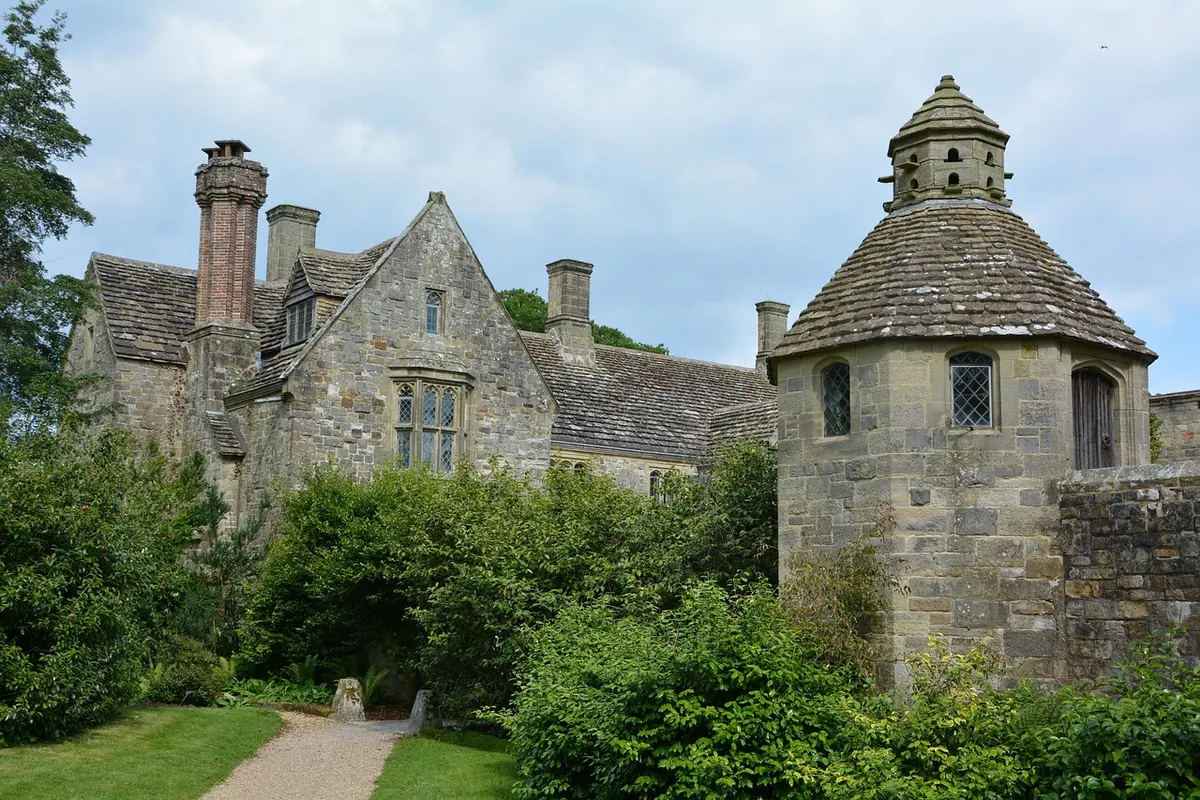
Scale is the first clue. A manor house is domestic rather than palatial — the most important house in the parish, but still a house someone lived in. Expect a hall, a parlour or two, panelled walls, a staircase with a story attached, a kitchen wing, and gardens pressing right up against the walls.
That domestic scale shows up in odd ways. A Tudor manor might still have its great hall with a screen's passage, plus a later brick front bolted on when fashions changed. A stone manor in the north might be fortified at one end and comfortably Georgian at the other. Nobody rebuilt from scratch; families added a wing when they married money and a bay window when they wanted a view.
Rooms are often small enough for a guide to talk about one family's habits: where they took breakfast, which door the servants used, why the window tax left its mark on the front elevation. That's the appeal. You get a household, not a palace, and the details do the work.
In practice, manor houses run as small museums, boutique hotels, or private homes open on selected days. Some take group bookings only, and a few still have the family in residence — which is precisely why the tour route dodges a private staircase or two.
What makes a country estate a country estate
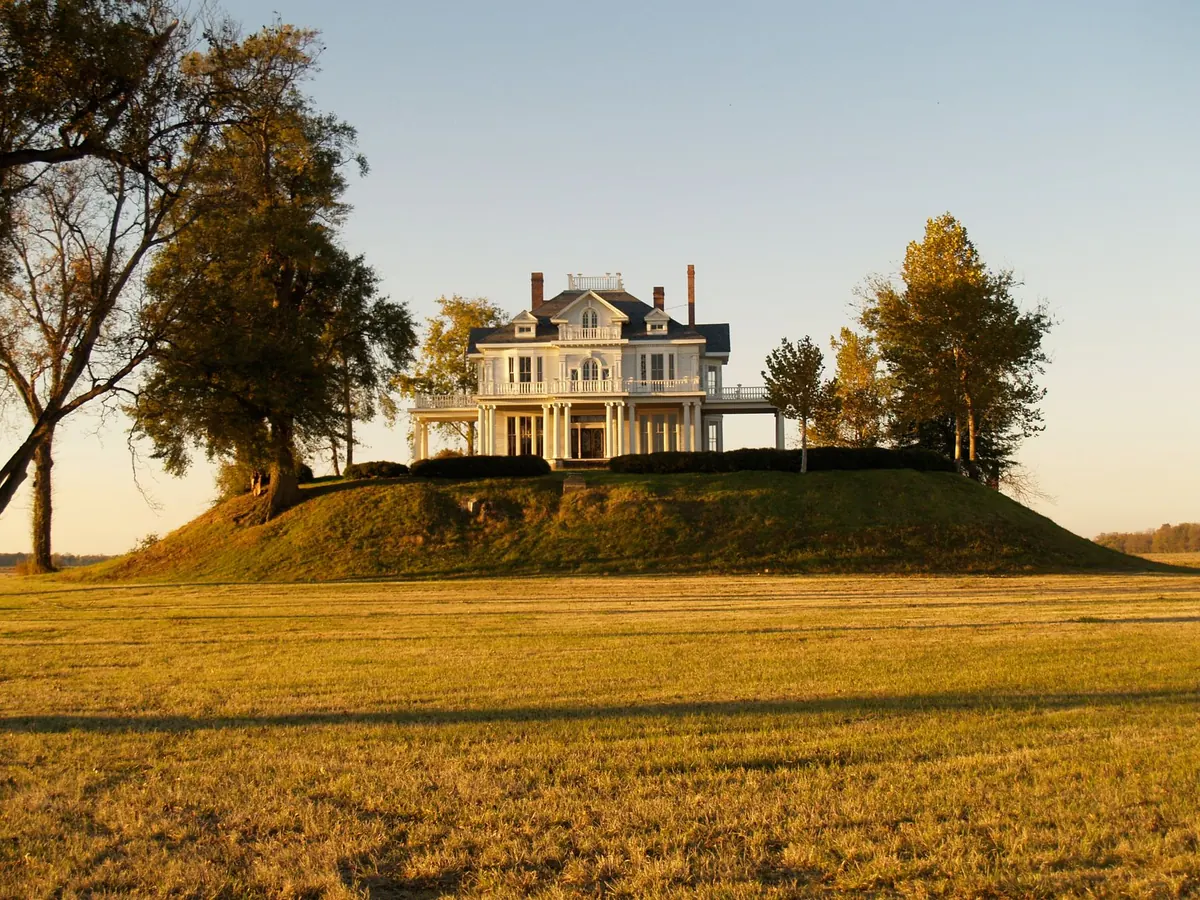
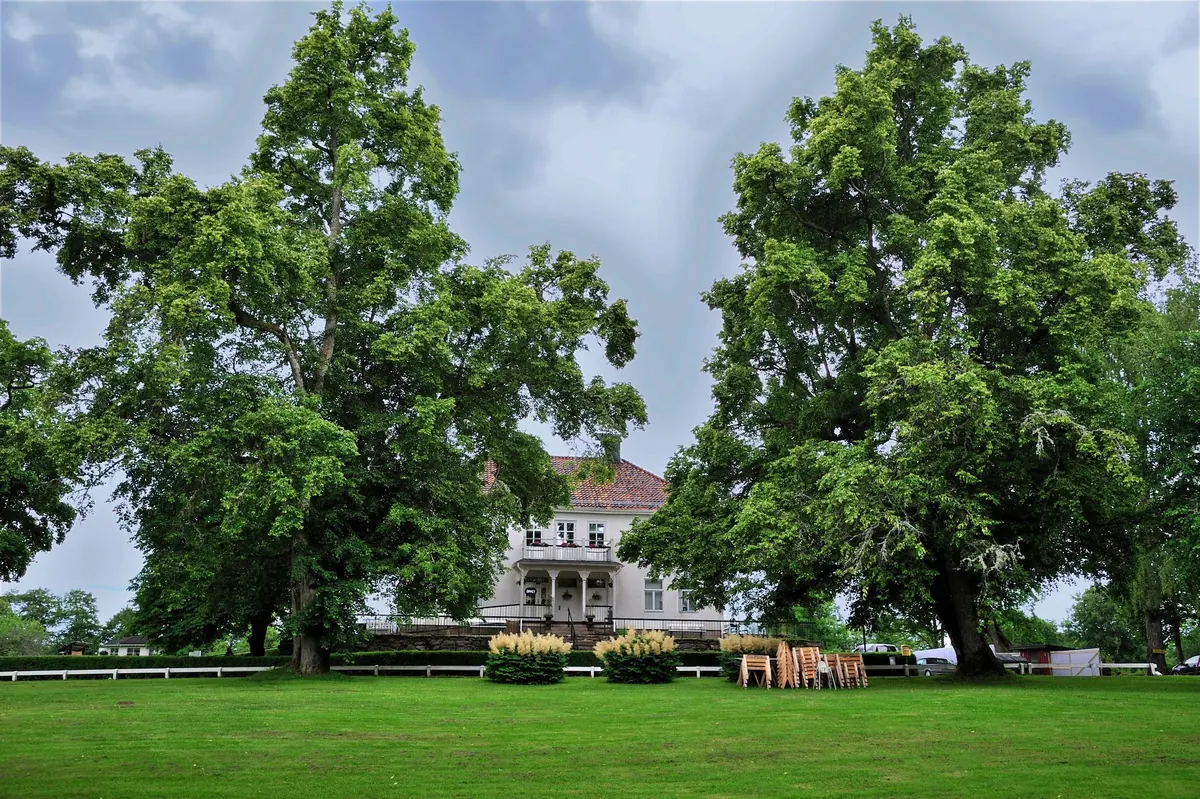
An estate is a landscape with a house in it. The house might be enormous or surprisingly modest; what makes the estate is the land and the way generations shaped it.
Look for avenues of trees planted to frame a view, parkland with grazing cattle or deer, a ha-ha that keeps animals out without a visible fence, a folly on the horizon, a walled kitchen garden, woodland rides, cottages built for estate workers.
Some of that shaping was pure theatre. Eighteenth-century designers moved whole villages, dammed streams to make lakes, and cut rides through woods so that a rider would keep catching glimpses of the big house. The apparent wilderness is usually a very expensive piece of stagecraft, and knowing that changes how the view reads.
Add in the working bits and an estate becomes a small economy: tenanted farms, a sawmill, an estate office, a forge, a school, a pub, sometimes a whole planned village of model cottages. Many of these still function. The tenant farmers pay rent, the woods are thinned for timber, and the deer are counted every spring.
That adds up to distance. You'll walk further, drive between entrances, and find the gardens are a destination rather than a backdrop. On many estates the house opens only in the afternoon or only in season, while the park stays open for most of the year. Check before you travel.
Tours: what you'll actually see
- Manor house: interiors are the main event. Expect guided room-by-room tours, timed entry, small groups, and a guide who knows which family member commissioned which fireplace.
- Country estate: the grounds are the main event. Expect parkland walks, garden tours, garden buildings, longer routes between highlights, and a house that may be one stop among several.
- Both: a tea room, a gift shop, and at least one flight of uneven stairs. Sensible shoes aren't a cliché here — gravel drives, cobbles, and grassy paths punish the wrong footwear.
- Both: volunteers who know far more than the label on the door suggests. Ask them which version of the story is the myth; you'll usually get a better answer than any audio guide.
Where the labels get slippery
Marketing does what marketing does. "Country house" is the safe umbrella term, used by hotels, wedding venues and anyone who doesn't want to promise either a museum or a park. "Stately home" is a twentieth-century phrase with a whiff of coach parties. "Hall", "grange", "court", "place" and "priory" are mostly historical accidents of who built the place and what it replaced.
The confusion runs both ways. A hotel may call itself a manor house because it has a mock-Tudor facade and eleven acres of lawn, while a genuine medieval manor might describe itself as an estate to sound grander. Meanwhile the word "estate" has drifted off entirely — it now also means a housing development, a business park, or the collective assets of a deceased person.
If the leaflet promises "acres of parkland" and "a house at its heart", you're on an estate. If it promises "panelled rooms" and "a story in every corner", you're in a manor house. If it promises both, you're probably reading a wedding brochure.
What it means for your day out or your event
For a day out, the practical difference is time and terrain. A manor house visit can be done in ninety minutes: park nearby, tour the rooms, tea, home. An estate visit is a half-day minimum once you've walked the park, crossed to the walled garden and found the folly, and the house may be the shortest part of it.
For weddings and events, the split is sharper still. Manor houses tend to offer a fixed number of intimate rooms — ceremony in one, dinner in another, a handful of guests staying upstairs — which suits gatherings of forty to eighty. Estates offer capacity and flexibility: a marquee on the lawn, a barn for dancing, space for two hundred, and often a shuttle from the car park because nobody walks that far in heels.
Checklist before you book
- Count the named places on the map. One house, one garden, one car park? Manor. Multiple lodges, gates, farms and walks? Estate.
- Check what your ticket covers. Grounds only, house only, or both, and whether the house has restricted opening hours.
- Read the access statement for distances, gradients and surfaces, especially if you're bringing a pushchair or a wheelchair.
- Ask how long the walk from the car park to the front door takes. The answer is surprisingly revealing.
- For events, ask how many rooms you actually get, and whether guests stay on site or travel in.
- Look at the shop. Postcards and a guidebook suggest a house; a farm shop, a plant centre and a woodland play area suggest an estate.
None of this makes one better than the other. A manor house gives you a family, close up. An estate gives you a landscape and the sense of a world built around one address. Knowing which you've chosen simply means you'll pack the right shoes, allow the right amount of time, and stop wondering what the difference was supposed to be.
Photo: Dielmann / Pixabay